By the third Saturday there were eleven bin bags of wet woodchip by the back door, and I could no longer smell anything except pipe tobacco. It had been in the walls for 45 years, and the steam was bringing it out in a warm brown cloud that got into my hair and stayed there until the following Wednesday.
Saturday one: steam and scoring
On 22 February we bought a £27 wallpaper steamer, the plate kind with a hose, and followed the instructions on the box: score the paper, hold the plate against the wall for half a minute, scrape downwards at a shallow angle. The woodchip had been painted over so many times that the first pass did nothing at all. In one corner we counted four colours of paint, including a pink I will not discuss. The trick, which none of the videos had made clear, is that you have to score through the paint before the steam can reach the paper, and scoring is slow, scratchy and loud.
The sockets in the house have no RCD protection, as the electrician had pointed out the day before. Matt put the steamer through a plug-in RCD adaptor he'd owned since he built his workbench, because mains electricity and a lot of hot water are a combination I'd prefer to meet with a safety net. He also opened the window an inch to let the steam out. By teatime the glass was streaming and the room looked like a very cheap sauna.
What was under the woodchip
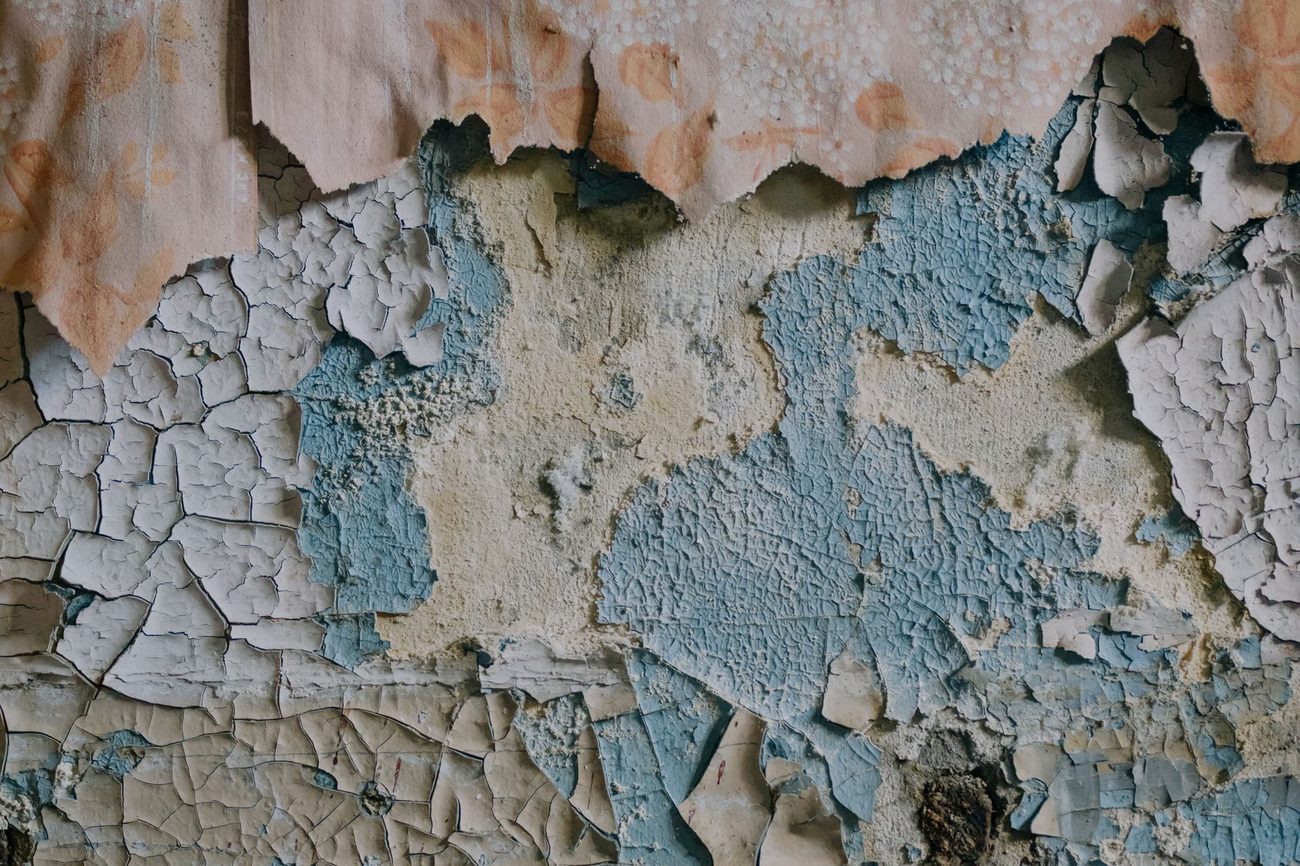
Under the woodchip, in a patch near the door, was a layer of 1970s paper in orange and brown, in big overlapping circles. It looked like the lining of a sofa.
Under that, on the bare plaster beside the chimney breast, someone had done their sums in pencil: a column of figures in pounds, shillings and pence, added up at the bottom with a line beneath. Decimal money arrived in February 1971, so whoever wrote that had done it before the orange paper went on. I assumed it was a decorator working out what the room would cost. I photographed it, and it's still there, and will be behind a coat of paint by next weekend.
Saturday two: the wall that fell off
On 1 March I earned the regret in the title. The wall next to the door was stubborn, so I kept the steam plate on one spot for several minutes to get the paper off in one satisfying sheet. It came off. So did the plaster underneath, in a single piece about the size of a tea tray, which hit the dust sheet with a soft, expensive sound.
I knocked on the rest of the wall with my knuckles and it was hollow almost from top to bottom. The plaster had lost its grip on the brick behind, and the steam had turned it into something like wet biscuit. We stopped, tapped off the loose parts and filled the holes, and after some discussion decided that lining paper over the repaired surface would give us a flat wall without paying a plasterer to skim it. A plasterer would probably have raked the lot off and started again. We've agreed to see how the paper looks and keep that option in our back pocket.
Matt had also gouged the plaster in two places with the scraper, one by the window and one beside the light switch. Filler solved both.
Saturday three: filling and lining
The last Saturday, 8 March, was filler, sanding, a vacuum, a second vacuum and, in the afternoon, the lining paper. I hung it horizontally on the blown wall, with Matt holding the far end, and it went on better than I'd feared. The sofa, which had made such a fuss about coming in, spent three weekends in the middle of the room under a bedsheet, like a ghost.
The bill was £96 in total: £27 for the steamer and £69 for filler, lining paper, sandpaper and paint. The paint is a pale warm grey, and it's in the hall waiting. The hardboard panel over the old fireplace stayed where it was. We didn't look behind it. That's a decision for another day.
What I'd do next time is test a patch in a corner first, then steam for twenty seconds and stop. The paper will tell you when it's ready. The plaster will tell you when you've gone too far, and by then it's on the floor. I stood in the doorway tonight and the room smelled of wet plaster and nothing else. I nearly missed the tobacco.