"It has to be level," Matt said at about 9.15am on Saturday 20 June, with a pencil behind his ear and a mug of tea on the workbench in the shed. "The garden doesn't." He was talking to the ground, which at the top of our garden slopes about as much as the rest of Walkley does.
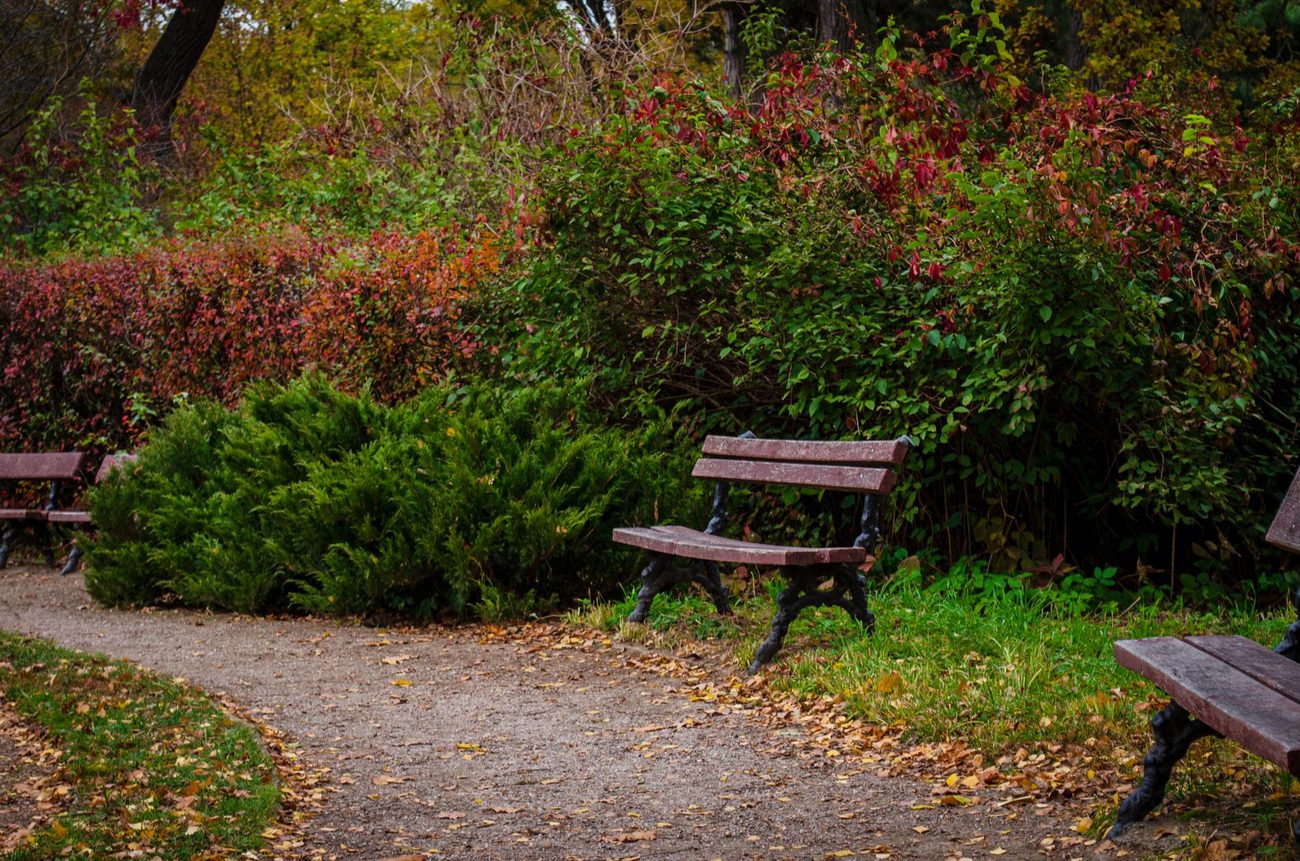
We've had two upturned crates up there since the spring. That's where I drink my tea and think about the washing line. The top level is the best bit of the garden, because it sits higher than the roof of the house and catches the sun late into the evening in June, with the city spread out below. It needed a proper seat.
The wood
The timber came from Jas. When he did his loft a few years ago he kept six lengths of old floor joist, 100 by 50 mm and about 1.8 m long, in his shed, and he said they'd been waiting for a reason. He threw in a bag of offcuts as well, some of them 100 by 25 mm, which became the backrest. Matt took 22 nails out of the joists with pliers, one at a time, and counted them into a jar. The wood is old, tight-grained redwood, as hard as anything, and it blunted two drill bits on the first morning.
The design came from a sheet of graph paper. It's a simple bench: the seat is four lengths of joist laid flat across two end frames, with 10 mm gaps between them so rain runs through, and the backrest is two offcut rails on angled uprights. It's 1.5 m wide, 43 cm deep and 45 cm high. Matt's second-hand mitre saw lives on his workbench and every cut went through it, including the angles at both ends of each upright.
Level on a slope
The ground at the top slopes about 1 in 12. Four paving slabs came free from Facebook Marketplace, from a woman in Crookes who wanted her patio back, and rode home in the boot of the Fiesta. Getting them up three levels of garden steps, one at a time, is not something I want to discuss. Matt dug each slab in to a different depth, deepest at the uphill end, and checked them against each other with a straightedge and the spirit level until the bubble sat between the lines. The bench stands on the slabs, not the soil, so the feet don't rot.
Everything was screwed together with exterior screws, 5 by 80 mm, with a pilot hole for each one so the old wood wouldn't split. By Saturday teatime we had a seat. On Sunday morning we oiled it: two coats of decking oil, the first at 8.30am, and the old joists drank it so fast that the tin looked half empty by the time the second end was done. There were four hours between coats, which we spent not sitting on it.
The backrest
The backrest was the mistake. Matt had drawn the uprights at 20 degrees, which looks sensible on paper. I sat on the bench on Saturday evening with a mug and slid forwards at a speed I wasn't happy with. He took the backrest off, recut the foot of each upright so it leaned at 12 degrees, and put it back. That cost forty minutes and a pair of waste cuts, and the backrest now holds a person and a hot drink at the same time. Next time we'd try the angle on a mock-up made of two crates and a plank before anyone touches the saw.
The screws were £11 for a box and the oil £12, so the whole bench cost £23. The joists, the slabs and the afternoon were free. The offcuts that were too small to use are in a box by the shed for kindling.
On Sunday 21 June, the longest day of the year, we carried tea up at 8.40pm. The sun was still on the top level, the roofs below were going orange, and the first cup on the bench was Matt's usual builder's strength, in the mug with the chipped handle. Pickle had got there before us and taken the left-hand end. We took the other one.