"You'll want to do the bottom edge," said Maureen, from her gate, at 8.15 on Friday morning. I hadn't opened the tin.
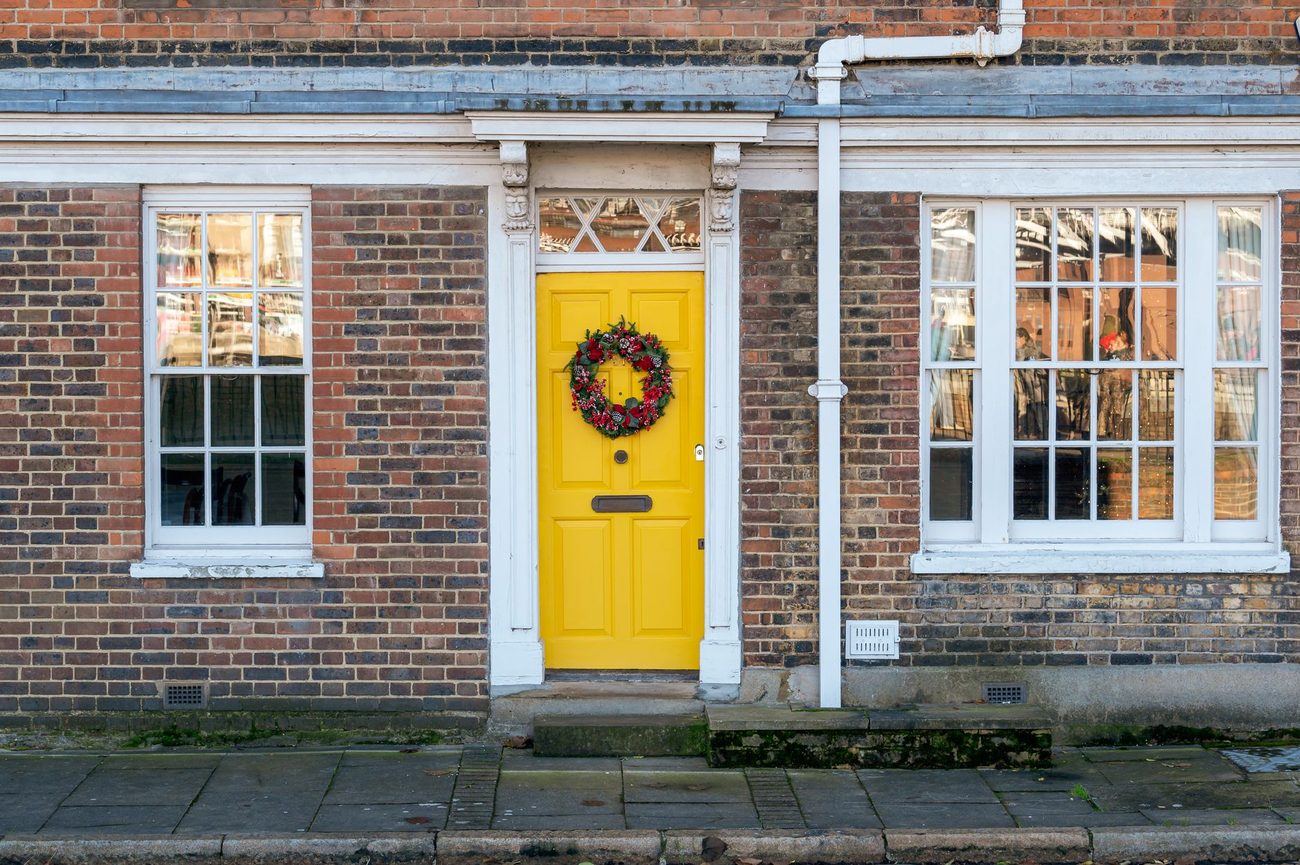
Our front door has been brown since the 1990s at least. Maureen says since the Gregorys, which would make it older than me. By July it was the colour of weak tea, gone grey on the side where the afternoon sun hits it, with a flaking strip along the bottom rail where the rain bounces off the step. Dennis's old tin is still in the shed, marked FRONT DOOR in felt pen, with a skin on top like a drum. We left it there. Maureen had asked to see the new colour before it went on, so on Wednesday I carried the new tin round and she read the lid with her glasses on. It is called Bottle Green. I'd checked it for spices. "Mm," she said. "Ron painted ours green in 1974." From Maureen, that is a signed certificate.
Sanding and filling
Matt broke up for the summer on Tuesday, so Thursday was the sanding. A door this age has layers going back to the thirties, and old paint can contain lead, so we didn't strip it. The job was to key the surface so the new paint had something to grip, and to scrape off only what was flaking. Matt wore a dust mask, I held a damp cloth under every patch he scraped so the dust landed in the cloth and not on the path, and it all went into a bag. If it had needed taking back to bare wood, I'd have asked a decorator.
Along the bottom rail there was a split in a patch of soft-looking wood. Matt pushed a screwdriver in and it stopped at 3 mm, so the wood was sound. We filled the split with two-part filler, sanded it flat by evening and taped the letterbox flap shut from the inside so it wouldn't glue itself to the wet frame. A parcel for Matt arrived on Saturday and went to Maureen's. It was the third of ours she has taken this year, and she has opinions about each.
Four coats in four mornings
Primer on Friday, undercoat on Saturday, first gloss on Sunday, second gloss on Monday. The door faces west, so everything was done in the morning shade: by one o'clock the sun swings round and the paint starts to dry on the brush. Between coats Matt rubbed it down with fine paper and I wiped it with a damp cloth. The door stood open on a wedge while the paint was wet, with Pickle shut in the back room, which she took personally. We used the back door and closed the front only once the surface had skinned over.
The mistake was mine, on Sunday. I started the first coat of gloss at 11.40, dawdled over the panels, and at ten to one the sun came round the corner and the paint began to drag under the brush. "Thin coats, Chlo," Matt had said. "If it looks like not enough, it's enough." I had put it on thick because the green looked thin. There is a faint ridge at the bottom left of the lower panel, and you can see it if you crouch, which I do every time I come in. From her step Maureen called "It's catching, love," about forty seconds after I'd noticed myself.
£58 and what I'd change
The total was £58: gloss £24, primer £11, undercoat £10, filler £4, sandpaper £4.50, masking tape £2.50 and a brush £2. It's water-based, so the brushes washed out in the kitchen sink and I didn't have to explain white spirit to anyone. I had a wet paint sign. Maureen made her own out of the back of a cereal box, because she said mine was too small to be taken seriously.
Next time I'd take the handle and lock cylinder off properly instead of masking round them. The tape left a faint line round the keyhole where the paint pulled away with it. And I would start the gloss at eight.
On Tuesday evening a woman walking up the hill slowed down and said "oh, that's smart" to nobody in particular. Maureen, who was watering her tubs, counted it as a compliment to Ron.