The incense stick had been in the drawer under the kettle since a Christmas present a few years back. On Saturday 20 September the wind was coming up the hill from the west, steady enough to rattle the gate, so I lit it and walked round the house like someone trying to move on a very small ghost. Matt followed with a notepad. Wherever the smoke bent sideways, he wrote it down.
We'd only had the heating on for a few test mornings, and I wanted the cheap jobs done before it went on properly in October. Last February we spent our first week in coats, and I would like this winter to be less Arctic. I'd rather find the gaps with a joss stick than with a bill.
Where the smoke went
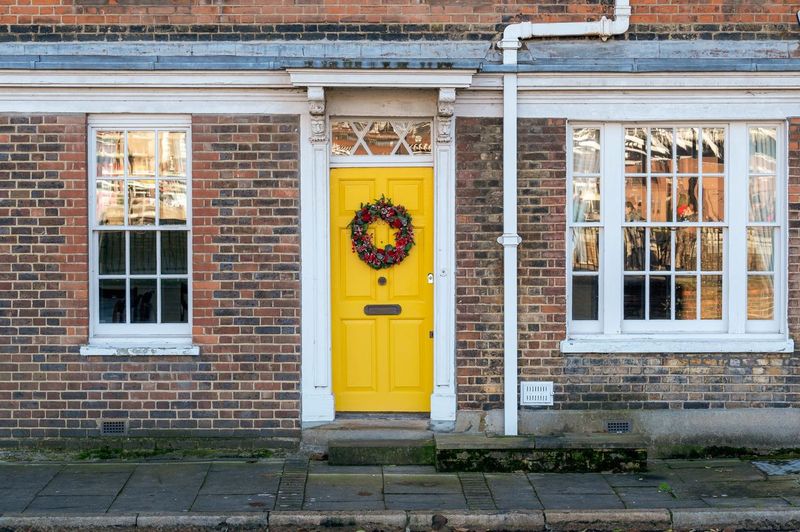
The letterbox was the loudest offender. The smoke didn't drift, it shot flat across the hall at knee height while the flap rattled like a loose tooth. The bottom of the front door came next, with a gap of about 5 mm that let in a stripe of daylight. I confirmed that by lying on the hall floor, partly for science and partly because I'd dropped the incense.
The surprise was the loft hatch on the landing. There's no wind up there, but the smoke curled upwards and slid through the gap round the frame as if someone were drinking it through a straw. That was warm air, the stuff we'd paid to heat, leaving through the roof. Along the front wall of the front room, the skirting board had pulled away from the plaster by 3 or 4 mm, and the smoke leaned towards it. Even the old keyhole in the back door whistled when I put my ear to it.
What went into the basket
- Brush strip for the bottom of the front door: £11
- Letterbox brush: £7.50
- Self-adhesive foam seal for the loft hatch: £8.50
- Keyhole covers: £5
- Two tubes of decorator's caulk: £9
- One tube of heat-resistant sealant: £7
That came to £48, from one trip to Screwfix and a top-up from Toolstation. Matt cut the door strip to length with a hacksaw, drilled pilot holes and had it screwed on before his tea went cold. The letterbox brush took ten minutes. I stuck the foam round the lip of the hatch frame so the hatch squashes onto it when it closes, and the keyhole covers just slide into place.
The flue was the one job I didn't do blind. Inside the boiler cupboard in the kitchen there was a gap where the flue pipe goes through the wall. Before touching anything near the boiler I rang the engineer who serviced it in March. He said the gap in the brickwork was fine to fill with a sealant rated for the heat, and that I should leave the pipe itself and the cupboard's air vents well alone. So I did exactly that, in gloves, with my head torch on.
The bits I'd do differently
I ran the caulk along the front-room skirting without masking tape. The first bead came out wobbly, I smoothed it with a dry finger, and it now looks as if a slug has been busy along the wall. Next time I'd tape both edges, make one pass, and peel the tape off while the caulk is still wet. The second tube went on much better, which is not the order you want it in.
There are also things we deliberately left open: the trickle vents in the window frames, the vents in the boiler cupboard, and the bathroom window, which has no fan and so stays on the latch. A 1930s house with a gas boiler and a shower needs air moving through it. The aim was fewer random gaps, not a sealed box.
I can't give you a saving. The heating has hardly been on, and the weather won't wait while I run a fair test. What I can say is that the letterbox has stopped whistling and the landing no longer feels like a fridge. Pickle, who slept on the hall mat all summer because it was the coolest spot in the house, sniffed the new brush strip, gave it a long look and moved to the radiator shelf in the front room. It wasn't even on.