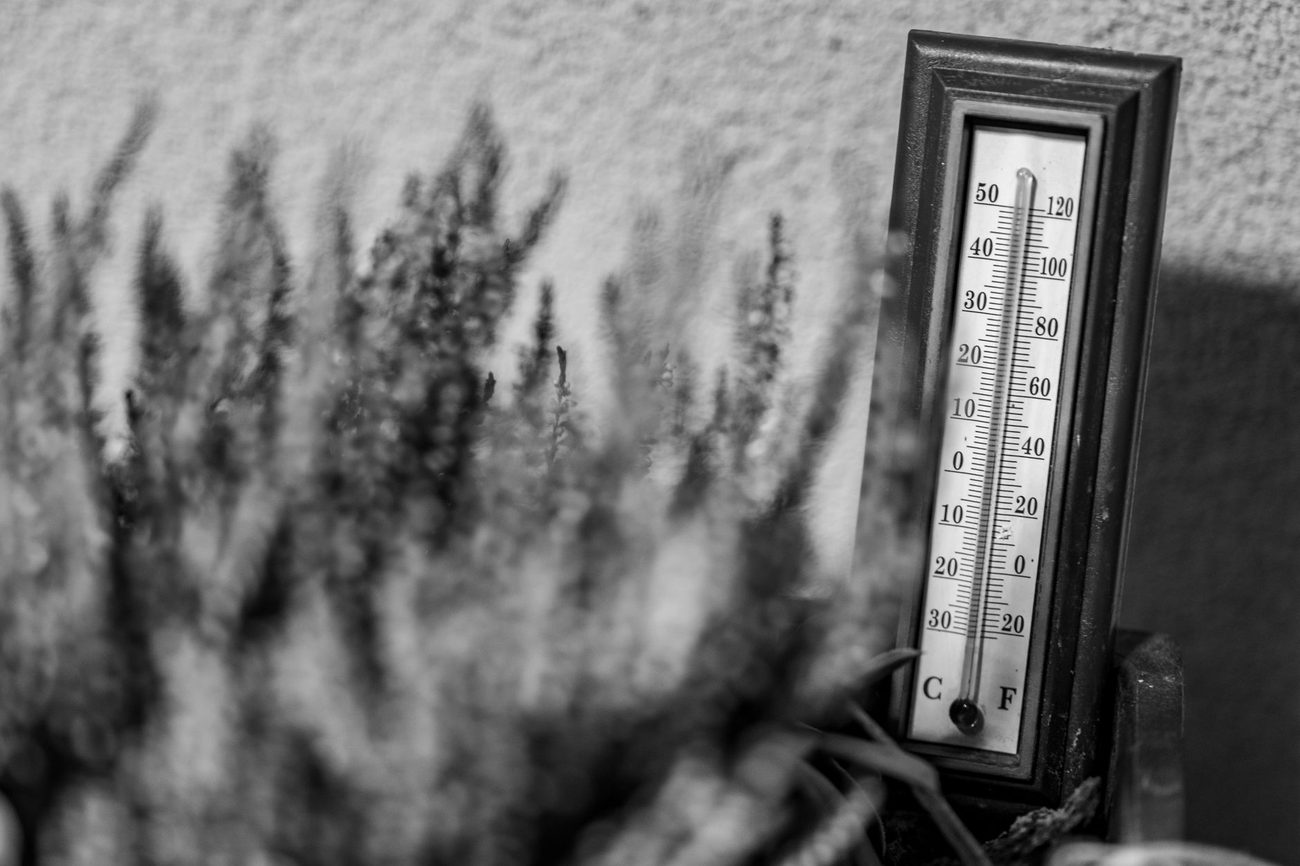
The hygrometer on the back bedroom shelf said 57% at 7.05am on Sunday. It's a £6 plastic thing with a little screen and a smiley face that wanders about, and I look at it on Sundays the way other people look at the football results.
Last year, on a Sunday in mid-February, Matt moved the wardrobe away from the end wall and found a patch of black mould about the size of a dinner plate in the corner, reaching from the skirting up to about knee height. We were two weeks into owning the house. I bought the hygrometer that week, took two readings (73% and then 71%), and promptly lost it in a box. It came back in October, when I fetched the one marked "misc" down from the loft looking for a spare key. It has sat on that shelf ever since.
What the readings say
Since Sunday 5 October I've logged a reading at 7am every week, which is 24 Sundays up to this one. They run from 52% to 64%, and most sit between 54% and 60%. The two readings from last winter are all I have to compare with, so I can't claim a proper before and after. But 71% to 73% last February against about 57% now is a difference I can see in the spreadsheet and, more to the point, in the corner.
The highest of the winter was 64% on Sunday 11 January, which was also the week a handful of black dots about the size of a 10p came back behind the bed head. I wiped them off with mould spray, opened the window for an hour and they have not returned. A small win, then, and a fair warning.
What changed
Three things, in the order we did them. The wardrobe came away from the wall after the first wipe-down in February, and has stood about 10 cm off it ever since. The back gutter was mended on Wednesday 24 September for £420, which stopped water running down the outside of that corner. And in November, the extractor fan went into the bathroom for £285.
The fan matters for the bedroom as well. Until November I dried washing on an airer in the back bedroom, because it has a radiator and nobody sleeps there. Two loads a week in a cold room with the window shut was a better recipe for mould than anything the gutter did. The airer now lives in the bathroom with the fan on and the door shut, and I'd say that is the single biggest difference after the gutter. I'd like to say I worked that out the day we found the mould. It took until October and a lot of reading.
The bit that hasn't changed
The wall itself is still cold. The infrared thermometer says the corner reads about 12°C on the coldest mornings, while the air in the room is about 16°C. By my sums (and I'm no building scientist, so ask a surveyor) air at 16°C next to a surface at 12°C means the surface sits at roughly 1.3 times the humidity of the air. At last February's 71% that comes to over 90% at the wall, which is where mould grows. At this winter's 57% it comes to about 74%, under the 80% that's usually quoted, though not by much.
That explains why the corner stayed clean this winter, but only just. A hygrometer reads the air, and the wall is colder than the air, which is why I don't think the job is finished. The gutter and the fan have taken the humidity down, but they cannot warm up a gable wall. That's what the insulation is for in May half-term, when we hope to move that 12°C a good deal closer to the 16°C in the room.
Next Sunday will be reading 25, at 7am as usual. I'll tell you if it's interesting. It usually isn't, and that is the point of it.