It was 3.10pm on Friday 31 January, about 4°C and spitting, and I was crouched in our front garden with a phone torch in one hand and a stiff plastic door in the other, reading numbers off a gas meter to Matt like a very slow bingo caller. He was holding the notebook. Behind us, in the kitchen, our brand new kettle had boiled and clicked off. Neither of us went back in for a good ten minutes.
The gas box and the cupboard
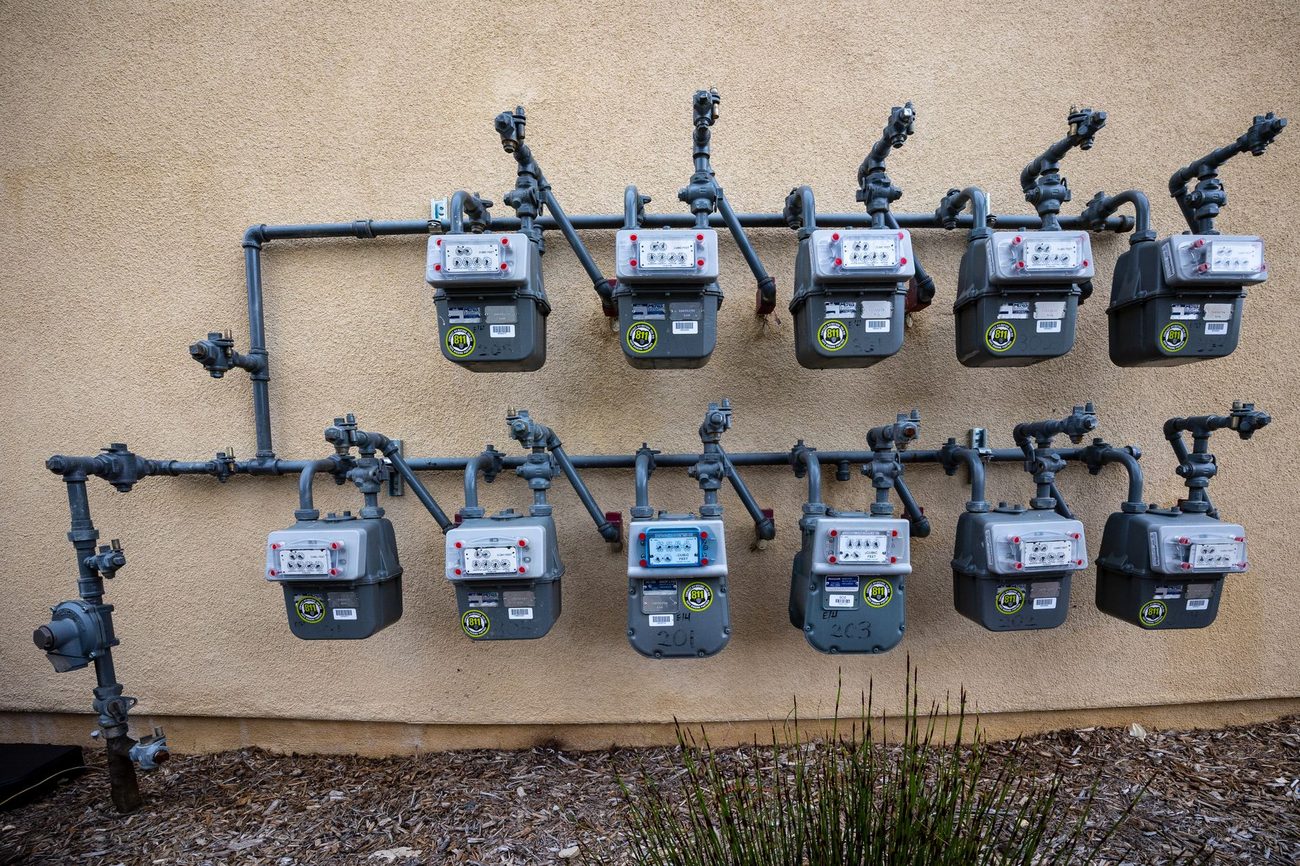
The gas meter lives in a box on the front wall, with a door held shut by a fat catch that took a thumbnail and some language to open. Inside was a row of black digits and, after them, a couple of red ones. You ignore the red ones. I took the photo with the date and time stamped on it, then a second one from further back to show it was the right meter, then a close-up of the serial number, because I have spent getting on for nine years in payroll and I believe in evidence.
The electricity meter is inside, in the cupboard under the stairs, and it took a phone torch held in my teeth to read. It's an older model with a row of white digits and one red one at the end. Down the wall beside it someone, I assume Dennis, had pencilled dates and numbers going back years, in a hand so neat it looked printed. I photographed those too. I'll come back to them another time.
While the kettle cooled, Matt went looking for the water stop tap and found it under the kitchen sink on the left, behind the waste pipe. We took a picture and stuck a bit of masking tape on the pipe so we'd know it again. If a pipe ever goes at two in the morning, I'd like to be looking for a bit of tape and not a rumour.
Why we did it before anything else
From the moment you get the keys, you're responsible for the energy used at the address. If you don't tell the supplier where the meters stand that day, they estimate, and the estimate comes from the previous owner's pattern. Dennis's paperwork gave his estimated annual gas use as 14,200 kWh. That figure came from a man who had lived there for 45 years, and the house had stood empty since the spring. If a supplier had billed us from that figure we'd have been arguing about a ghost's heating.
With dated photos, nobody argues. Anything before 31 January is Dennis's, and Karen's to sort out for him. Anything after is ours. At work we say that if it isn't written down with a date, it didn't happen, and the same applies to a gas meter.
Where the readings went
The previous owner's supplier is the one that serves the house until you choose another. Karen's folder of paperwork named them, and that evening, back at the flat, I made an account on their website and put in both readings with the photos attached.
My first attempt included the red digits, which made the gas reading far too large for a house that had stood empty since spring, and the form refused it with a message about implausible use. Second time I left them off and it went through.
Because we hadn't chosen anything, the house sat on what's called a deemed contract: no fixed term, the supplier's standard rates, limited by Ofgem's price cap but not cheap. It isn't a trap. It's how the lights stay on while you decide, and I'd already decided I wouldn't stay on it for long.
The week after we moved in, I also bought a battery carbon monoxide alarm for £22 and Matt fixed it to the kitchen wall near the boiler cupboard, following the leaflet to the letter, including the bit that says where not to put it. I pressed the test button, and it made a noise that went through the whole house, and Matt said he felt safer. I said I felt slightly deaf.
The photos are still on my phone, in an album called "Day one". It's the least romantic thing I own and one of the most useful.