"East and west," said the first man, tapping his laser measure against the roof plan on his tablet. "That's the awkward one." It was Friday 10 April, I was working from home, and I'd made him a tea he didn't finish because he was too busy looking at our chimney.
Our EPC, the D with 63 that I wrote about in November, lists solar panels among its recommendations. I'd been putting off dealing with it, but with Matt home for the Easter holidays there was someone to talk roof pitch with the installers while I took notes. We got three quotes in about a fortnight: two from people who came to the house (Friday 10 April and Friday 17 April) and one built from satellite pictures, which I trusted least.
What fits on our roof
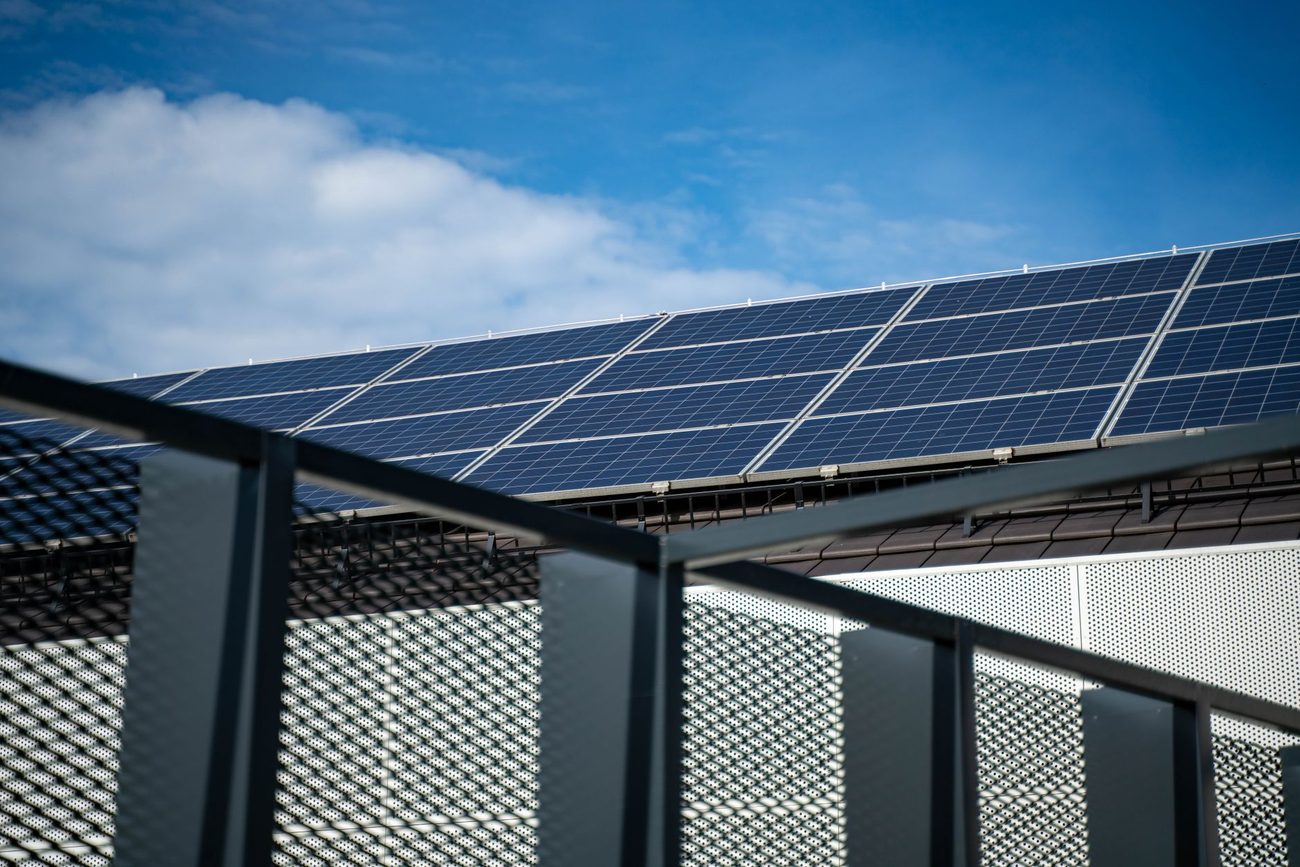
Our roof slopes face roughly east at the back and west at the front, with our side of the shared chimney stack shading a corner of one slope for part of the day. That rules out the ideal south-facing array, but it spreads generation over the day. All three quotes came out at about 8 panels, four on each side, giving 3.4 kWp. The concrete tiles are from the 1990s, and when I phoned the roofer who has done our ridge and chimney pots he wasn't worried about them carrying the load. The installers just wanted to start the panels a little way from the stack.
The three prices were £5,900, £6,400 and £7,200. The company behind the £7,200 quote also offered a version with a battery for £9,800, which is £2,600 on top. All of them estimated about 2,700 kWh a year. The Energy Saving Trust's online calculator gave us a figure close to that, which was reassuring because a salesman's estimate is the one thing I won't take at face value.
Doing the sums
This is where I made my mistake. When the first man asked how much electricity we use, I said "probably about 3,000 kWh a year" from memory. Our actual first full year was 2,310. I corrected it by email the next day, but his first estimate of savings was too rosy, and if I'd had the half-hourly data printed I'd have saved us both the correction.
Here's the rough maths we did afterwards. Matt is out all day in term time and I'm out three days a week, so I guessed half of what the panels make gets used in the house, which is probably generous: 1,350 kWh at roughly 27p is about £365. The other half goes to the grid, and export payments vary a lot between tariffs, so I used about 8p, or £108. Together that's roughly £470 a year, which gives a payback of 12 to 14 years on the two cheaper quotes and longer on the others. That assumes electricity prices stay where they are.
The quotes also don't talk much about the dull parts. One installer mentioned the inverter might need replacing somewhere in the middle of the panels' life, at a few hundred pounds. Another said we'd need to tell our insurer and our lender, which I'd have forgotten. The scaffolding was a line of £640 in one quote and invisible in another. I'm not an installer, so I asked each one to put all of this in writing, and the insurance question is one for our own insurer.
Why we're waiting
The kitchen comes first. The 1990s units are on borrowed time, and putting £6,000 into a 12-to-14-year payback while we may need a kitchen in 2027 felt like spreading the money too thin. The EPC's other recommendations are cheaper per pound saved, too. The loft top-up is on the list for when the moving boxes finally leave the loft.
I keep asking myself whether waiting is just a polite way of saying we're nervous about £6,000. Possibly. But the roof will still face east and west in two years.