The clocks went back on Sunday 26 October, and the Sunday after that it was dark by 5pm and the folder from the sale was open on the kitchen table at the page with the coloured bars. Our house sits in band D with a score of 63 out of 100. A little arrow beside it points at the potential, which is a C.
What the numbers mean
An Energy Performance Certificate runs from A at the top to G at the bottom. D covers 55 to 68 and C covers 69 to 80, so we're six points short of a C. The score is built on the modelled running cost per square metre of floor, not on how much gas anyone actually burns. The certificate was done in 2024 for Dennis's sale and lasts ten years. On the last page is a list of recommendations, and there are five of them.
- Cavity wall insulation. The certificate assumed our walls were partly filled. The camera check last month showed they really are, and the extraction and refill quote was £2,600. We're not doing that.
- Loft insulation top-up. The loft has about 125 mm of old mineral wool and the certificate wants nearer 270 mm. I haven't priced it, but rolls of wool for a loft this size should be a couple of hundred pounds if we lay it ourselves.
- Floor insulation. Ours is a solid ground floor, so this would mean digging it up. No.
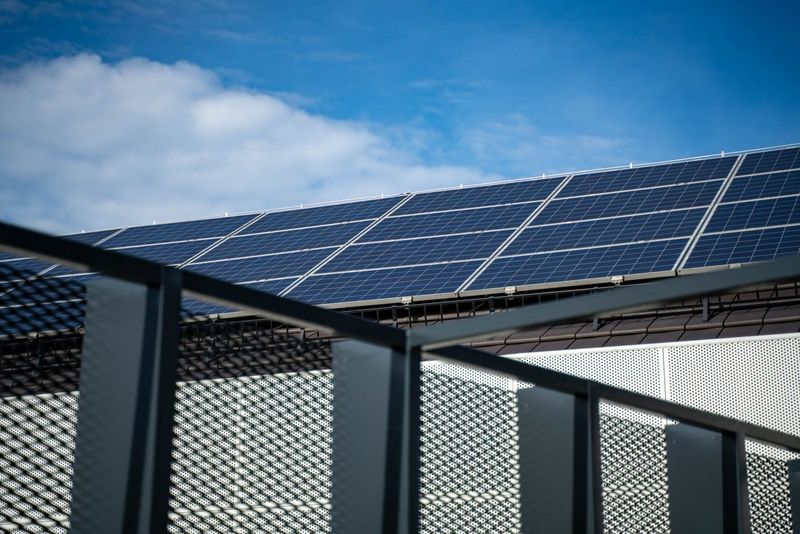
- Solar panels. We haven't asked for any quotes. Our roof slopes face east and west rather than south, and the chimney stack throws a shadow, so I'm in no hurry.
- Low-energy lighting. Already ticked. Every fixed bulb was an LED when we arrived.
What we're doing first
On paper, all five together would get us to a C, and no single one would. It was a little deflating to find that the one recommendation we'd already ticked was the one that costs nothing. The loft goes first, because it's the cheapest and we can do it ourselves, but it has to wait until the moving boxes come out of it. After that comes the back bedroom gable wall from the inside. That isn't on the certificate in those words, but it is the coldest part of the house, and the camera check told us the cavity isn't an obvious place to start.
The things we won't do yet are the expensive ones. Floor insulation means taking the ground floor up, which is a bigger job than a small house deserves. Solar I'd like to price up properly when we're ready to spend, rather than guess at it now. I've also noticed that I like having one big job on the go at a time.
A model, not a meter reading
The part I find most useful is also the part nobody mentions. An EPC is a computer model. It assumes a standard household heating a standard house in a standard way, and it guesses at whatever it can't see, which is why our walls are marked "assumed". It knows nothing about the three things we've actually done for the bill: draught-proofing in September, turning the boiler's flow temperature down to 55°C, and keeping the rooms a bit cooler than the model's idea of a sensible house.
Dennis's handover paperwork estimated 14,200 kWh of gas a year. Our first year isn't finished, but we're on course for something nearer 10,000. Some of that will be that we're out at work most weekdays, and some will be that the estimate was written for a different household. I wouldn't swear by either number. The certificate is a starting point, and the smart meter is the record.
The loft boxes are the real blocker, and I know it. There are twenty-odd of them up there, from the move, and I couldn't tell you what's in half. On the spreadsheet the job sits under "loft boxes", cost £0, status "since March". I should probably open one.