The first thing I noticed when the electrician switched the whole house off, at 8.40am on Friday 21 February, was how loud the silence was. No fridge-freezer hum, no pump in the boiler, no little light blinking on the router in the corner. The router had been working for two days and I already missed it.
Why we booked it
The survey had given the electrics its worst rating, a 3, and said to get them looked at by a registered electrician. Before we bought, a friend of a friend had given us a ballpark figure for a new consumer unit, and we'd used that to get £2,500 off the price. But a ballpark isn't a test. In our first week Jas from across the road passed us his electrician's number, and three weeks after completion we had a date.
The test is called an EICR, an Electrical Installation Condition Report. Landlords have to have one. Owner-occupiers don't, as far as I know at the time of writing, but we wanted to know what we had. It cost £180.
I stayed for the first couple of hours, then took my laptop to a table in the library, because a house with no power is no place for a payroll officer. Matt stayed behind on half-term to follow the electrician round. He's a design and technology teacher, and he watched the tester with undisguised envy.
Four hours with the lid off
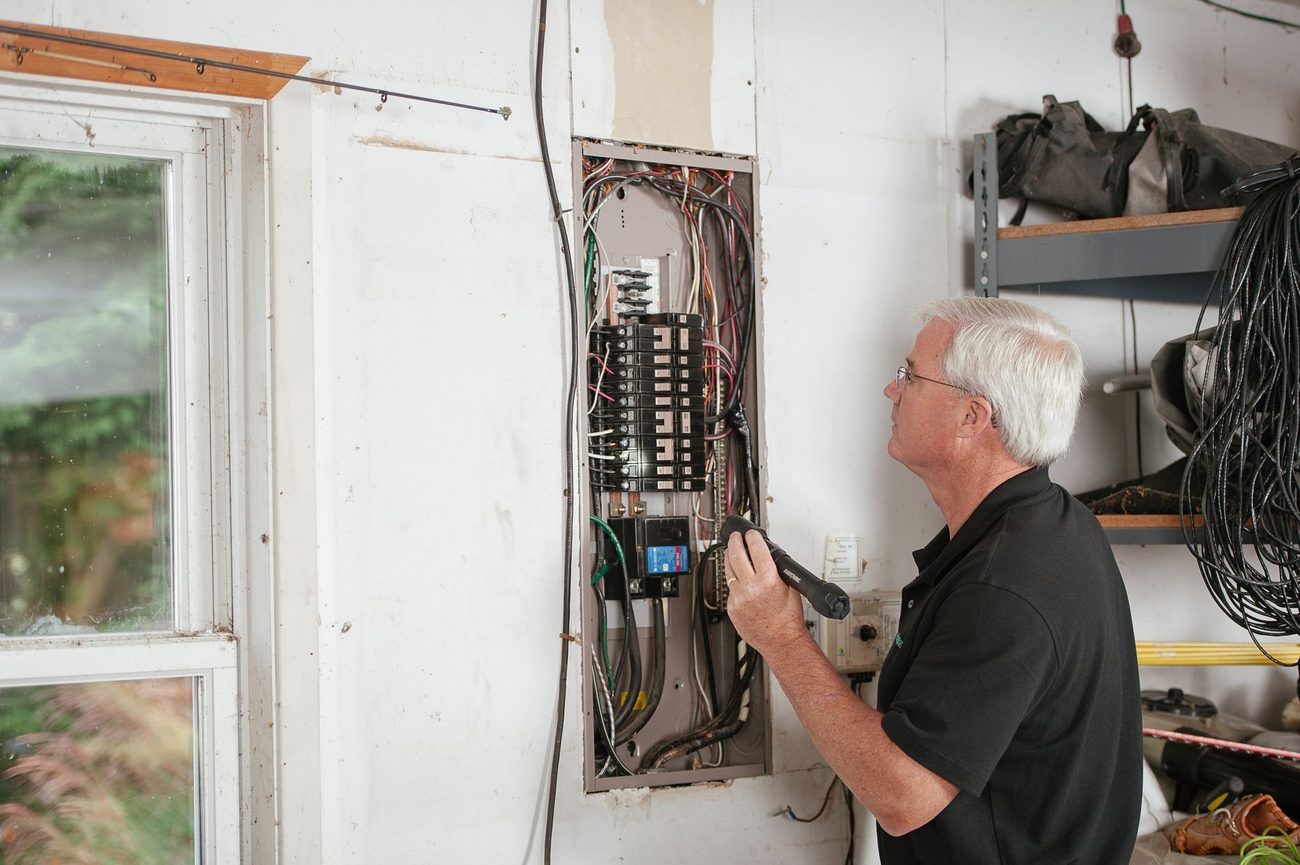
The electrician took the front off every socket, switch and light fitting in the house, thirty-seven of them by Matt's count, and tested the wiring behind each. Some of it was done with the supply off, and some with it on, so there was a ten-minute gap mid-morning when the power came back and Matt made four cups of tea, which he carried round the house like a waiter. The whole job took four hours.
At about half past nine he took the faceplate off the double socket in the kitchen, the one beside the kettle, and went quiet. The back of it was brown. The plastic had softened where a loose connection had been getting hot, and the cable insulation had darkened. He switched that socket off at the board, taped over the fuse and stuck a note on the wall. I had boiled the kettle on that socket every day for three weeks, probably a hundred times, and from the front it had looked perfectly ordinary.
What the codes mean
The report uses four codes. This is the plain-English version, as our electrician gave it to us.
- C1: danger present, fix it now.
- C2: potentially dangerous, urgent remedial work needed.
- C3: not dangerous, but improvement recommended.
- FI: further investigation required.
A C1, a C2 or an FI anywhere means the report as a whole is "unsatisfactory". That sounds more alarming than it is: it's the form's way of saying something needs doing. We had no C1s and no FIs, but we had two C2s.
The first was that none of the socket circuits had RCD protection. The 1990s fuse board still had rewireable fuses, a small card holder with a length of wire in it, and an RCD is the device that cuts the power in a fraction of a second if electricity starts going somewhere it shouldn't, such as through a person. The second was the scorched kitchen socket.
The C3s were the small stuff: some older sockets, a few of them cracked and nothing labelled on the board except a pencilled note from Dennis that said "fuse 3 = upstairs". I like the note. I'm not sure it counts as a labelling system.
What happens next
The report arrived by email on the Monday, eleven pages long, with a code beside each line. His quote for a new consumer unit came with it: £720, with the scorched socket replaced as part of the job. I thought it was fair, but I wanted two more quotes before saying yes.
Before he left on the Friday he'd told us not to use the scorched socket and to run anything portable, like a steamer or a power tool, through a plug-in RCD adaptor. Matt already owned one. The kettle moved to the other side of the kitchen, and I keep looking at the old socket with new respect.
The next job is the board itself. I've rung two more electricians for quotes, and the first of them can come on Monday.