At 6.40am on Tuesday 2 December the house should have been warming up. The thermometer on the landing said 13°C, the hall radiator was cold under my hand, and the Fiesta outside had a thick white coat after a night of -3°C. The boiler had made its usual clunk at 6.30, and then nothing. I ran the hot tap in the kitchen, and it came out properly hot within seconds.
That was the first clue. The boiler was working perfectly well for the taps and doing absolutely nothing for the radiators. Here is what we tried before ringing anybody.
What we checked first
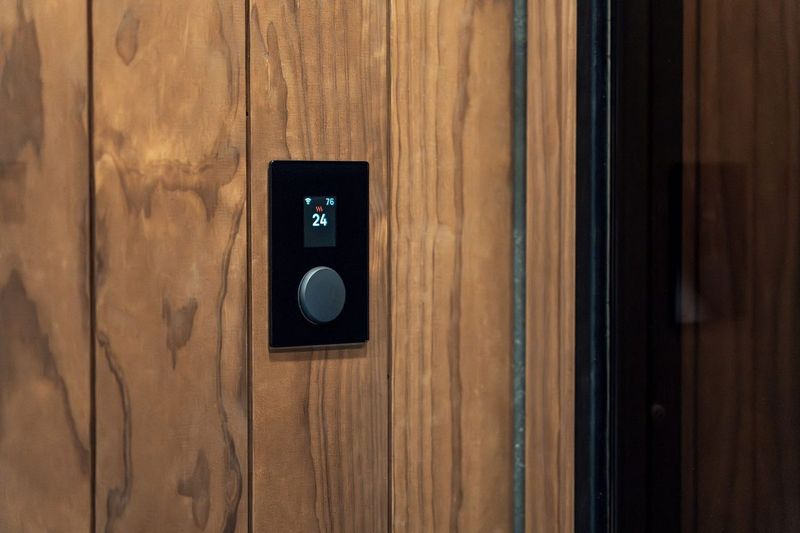
The pressure gauge read 1.3 bar, in the green. The wireless thermostat had fresh batteries, because I swapped them in the dark with my head torch and Matt holding the spare set. I turned the heating off and on again, tried the boost button, and read the manual Dennis left in the drawer. The display was showing a fault code. The manual's advice, translated, was "call an engineer".
I rang the Gas Safe engineer Maureen uses at 7.15am, and he answered on the third ring. He said it sounded like a diverter valve and that he could be with us the next morning. I'd have liked sooner, but I'd also have said yes to anything involving a van.
Two nights with an oil radiator
We spent that evening in the front room with the door shut, while the hall slid to 11°C and I could see my breath by the front door. Matt marked a pile of design folders in his duffel coat, and nobody sat anywhere near the kitchen. Pauline had offered an oil-filled radiator by text before lunch, Matt collected it on his way home from school, and I filled two hot-water bottles and wore my coat to watch the news. The display on the kitchen windowsill jumped by about 2 kW whenever the radiator came on. With the thermostat cycling, I worked out it cost around £2 a night, which felt reasonable for a warm bedroom. Pickle moved onto it within minutes and wouldn't be shifted. She spent the whole of Tuesday evening lying along it like a draught excluder.
The engineer arrived at 8.30am on Wednesday 3 December, and I showed him my notes as if he were marking them. He had a look at the boiler, listened to it, and confirmed the diagnosis. The diverter valve is the part that decides whether the boiler's heat goes to the taps or to the radiators. Ours had stuck on taps. He hadn't got the part in the van, so it was ordered from a merchant for the next morning. That meant a second night with the borrowed radiator.
Fixed on Thursday
I swapped my Thursday office day for a home day to let him in. He came back at 9am on 4 December with the new valve, drained part of the system, fitted it, refilled and bled the radiators, and had the heating running by about 10.30. By noon the front room was 20°C and the radiators were hot to the touch. I stood in the kitchen with my hand on the hall radiator, as if it might change its mind.
The total was £240 for the part, the visit to work it out and the visit to fit it. I asked him whether turning the flow temperature down to 55°C in September could have caused it. He laughed, not unkindly, and said a diverter valve wears out from years of switching back and forth, and that an eleven-year-old boiler had done well. He mentioned the magnetic filter again as he left. It is still on the list.
I wrote in October that a pot doesn't book an engineer for you at 2am, and that's still true. What it did this time was pay for the repair. We had £135 in the boiler pot, nine payments of £15 since April, and the other £105 came from the house fund. Nobody had to ring a bank. That's a dull sentence, and I'm delighted to write it.