Our house went silent at 8.31am on Friday 14 March and came back on at 3.04pm with the loudest noise I have ever heard indoors: three alarms going off at once, on purpose. The six and a half hours in between were the strangest I have spent in my own house.
Why the old board had to go
The consumer unit is the box that takes the electricity coming in and splits it into circuits. Ours lived in the cupboard under the stairs and dated from the 1990s, with rewireable fuses: little grey holders, each with a length of fuse wire in it. It had no RCD protection on any of the sockets, which was one of the two urgent items on our electrician's report, along with the scorched socket in the kitchen. The kettle had been living on the other side of the room for three weeks.
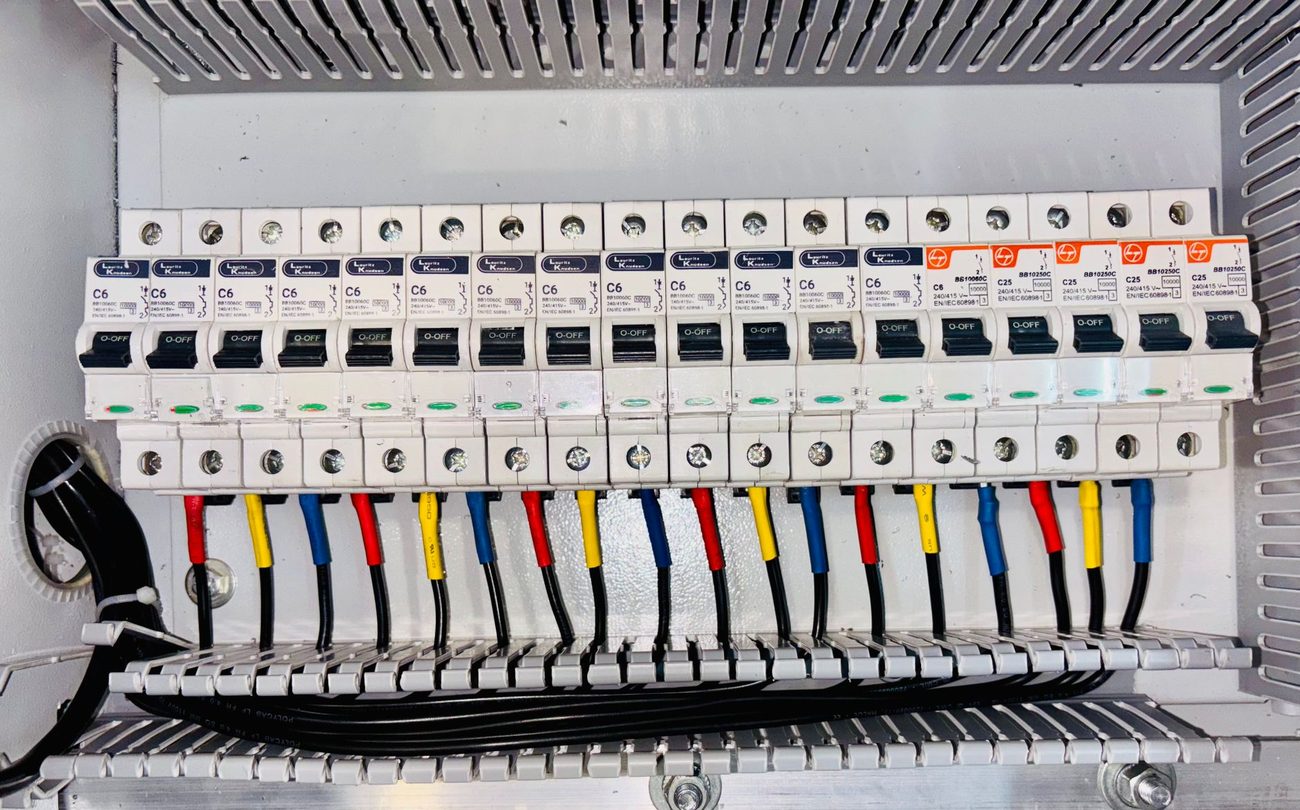
The new board is a 10-way unit with an RCBO on every circuit. That's a breaker and an RCD in one, so a fault on one circuit trips only that circuit. With a single RCD for the whole house, a fault in the lighting upstairs could take out the freezer too. It also comes with surge protection, which our electrician said is normally fitted on a new board now.
Three quotes, one decision
- £690, from an electrician we found online. The board had no surge protection, and the quote didn't mention the certificate or notifying building control.
- £720, from the registered electrician Jas recommended. A 10-way RCBO board with surge protection, the scorched socket replaced, a certificate, and notification to building control through his registration scheme.
- £950, from a larger firm with two vans and an office. A similar specification, and a lovely brochure.
I couldn't see what the extra £230 for the third quote bought, and the £30 saved on the first came with gaps I had no way of checking. This is the one job in the house where I can't judge the work by looking at it, so I picked the person I could ask questions of and the one who put it all in writing. We didn't take the cheapest quote, and I haven't regretted it once.
The day itself
Two electricians turned up at 8.15, an older one and a younger one who did most of the lifting. I emptied the cupboard under the stairs at twenty past eight, with both of them waiting politely on the step, and the hoover, the ironing board and a box of cables sat in the hall until 3pm. Next time I'd do that the night before. The power went off at 8.31. I worked in the box room on the laptop's battery and my phone's hotspot until the battery gave up at ten to two, then took the rest of the day as flexi time, which in the week before payroll cut-off is not something I do lightly.
Matt had left his camping stove by the back door before he went to school, with a note that said "Tea. M.", and I made ten brews on the doorstep, one saucepan at a time, in a wind that blew out the flame twice.
Meanwhile the old board came out in one piece, and a bowl of grey cable spaghetti was labelled and reconnected to the new one. They cut carefully round Dennis's pencil note on the wall, "fuse 3 = upstairs", which now describes a board that is in the back of their van. The kitchen socket came out too. The older electrician showed me the back of it, and it was cooked brown. He said it had probably been loose for years.
While they were there, we had mains-wired smoke alarms fitted in the hall and landing, and a heat alarm in the kitchen, for £165. The kitchen has a heat alarm rather than a smoke alarm because of toast. All three are linked and have a battery backup.
The labels and the noise
The new board has a label for every way, written in marker pen in a neat hand: kitchen sockets, downstairs sockets, upstairs sockets, lights downstairs, lights upstairs, cooker, boiler, then three spares. For the first time in the house's life, someone could tell me what the switches did. The power went back on at 3.04pm, and the younger one pressed the test button on the hall alarm. All three screamed together, as designed. Two knocks came through the party wall, and a muffled voice: "Is that you?"
The certificate was emailed to me that evening, and a confirmation of the building control notification came from his registration scheme a few days later. We paid £720 for the board and £165 for the alarms, £885 in a single day, more than twice everything else on the house tab so far, which stood at about £420. It went into the folder labelled HOUSE, next to the EICR report.
Brew count: 10.