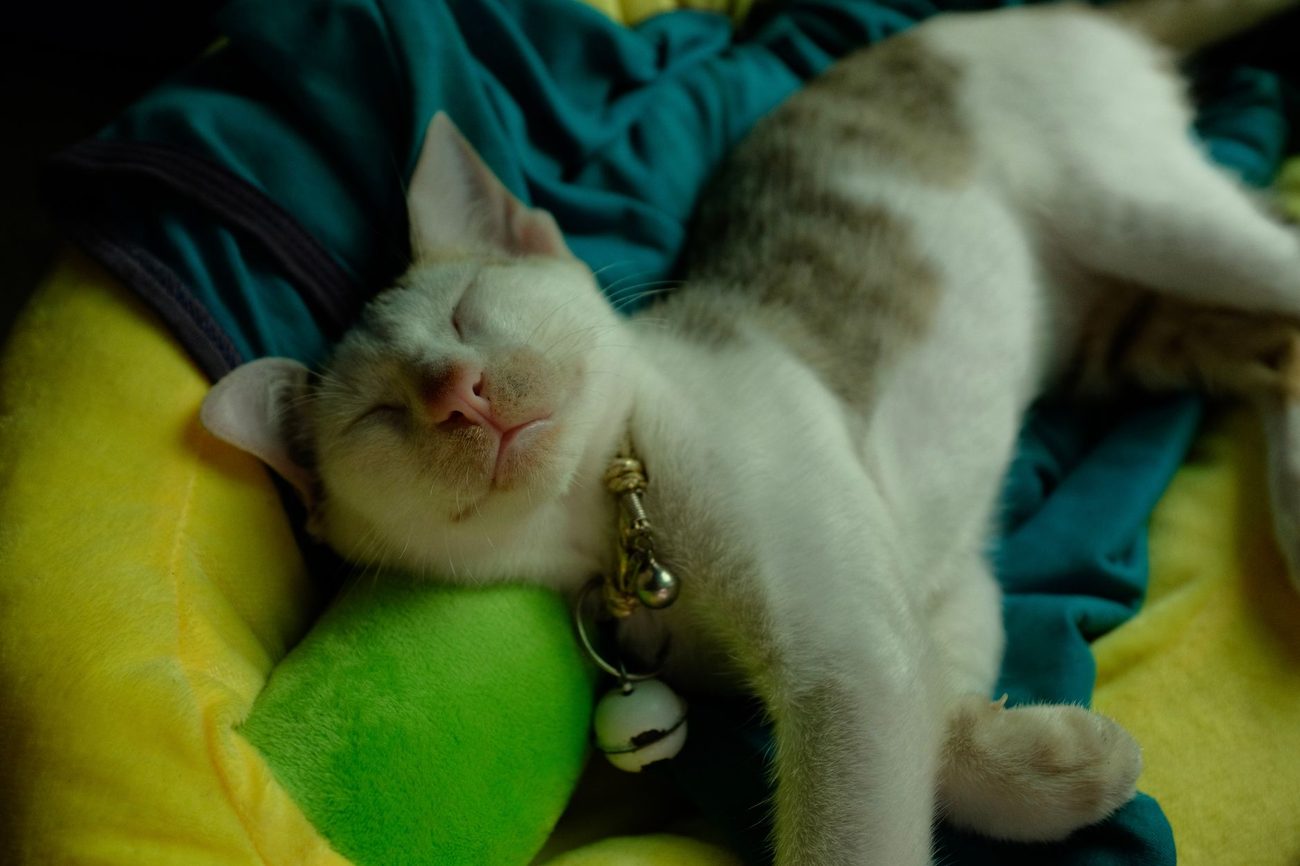
The crash came at 10.40pm on a Tuesday in February. Matt said "That'll be the lamp" without looking up from his marking, and he was right. The floor lamp in the front room was on its side, the bulb had survived, and the shade had a dent in it exactly the width of a cat.
Pickle came home on Saturday 17 May 2025, so she has now been with us a year and ten days. I keep the household accounts, so of course I've added her up. I held off writing this until I had the whole year, including the dull lines.
The first year, line by line
- Adoption fee: £95, which included her microchip and spay.
- Insurance: £11.40 a month, £136.80 for the year.
- Food: about £24 a month, £288.
- Litter: about £6 a month, £72.
- Flea and worm treatment: about £9 a month, £108.
- Vet health check £48 and booster £62: £110.
- The lampshade, from IKEA: £18.
That comes to £827.80, which I round down to "about £800" when people ask because it sounds friendlier. It leaves out the first-week shopping (a litter tray, bowls, a scratching post and a bed she has never once lain in), which was £46. The part that repeats is £50.40 a month, and that's the line I see in the budget spreadsheet.
Insurance is the line I think about most. It's £136.80 for a year in which it has paid out nothing, and I'd pay it again, because one bad week at the vet would cost more than the whole year's premium. I'm no expert on pet policies, so read your own wording for what's excluded. Ours had a long list.
What she's broken
The lampshade is the only thing with a receipt. Our contents insurance doesn't cover damage done by a pet, which I'd read in the wording when we adopted her and had forgotten by the time I was standing in the front room holding the shade. A claim would have cost more in excess than it paid out. The rest sits below the line of what's worth writing down: a seedling in a raised bed, one of Matt's mugs, the cord off the box room blind.
The raised beds were the other trouble. Last June she tried one as a litter tray, as I wrote at the time, and we laid chicken wire over the soil until the plants were tall enough to look after themselves. She still hates the hoover with a loyalty I rather admire, and she still spends the mornings on the radiator shelf in the front room, looking like a woman who owns the lease.
What I'd do differently
I'd buy the small bag of food first. In the first week we bought a 4 kg bag of the dry food the rescue had been feeding her. She ate it for two days and then looked at the bowl with open contempt. We gave the rest to the rescue. It was an £18 lesson that a £4 bag would have taught me.
I'd also find a vet before adoption day, not the week after. The first week with a cat is no time to be ringing round practices with one hand on a carrier and the other on a lid. The rescue gave us the paperwork for her microchip and spay, but not a vet, and the first practice I rang had no new-patient appointments for a fortnight. The check, once we found one, was £48.
None of this was on my mind when we filled in the adoption form. We were thinking about the home visit, the garden steps, whether the gennel was a danger, the hill. The money came later, on a Sunday, with a calculator. I'm not complaining about it. Averaged over the year, with the one-offs in, she costs about £69 a month, and she repays it by sitting on my feet in the box room on Wednesdays.
She's on the top step of the garden as I write this, on the one flagstone that holds the afternoon sun until about five, with her back to the house and in no hurry at all.