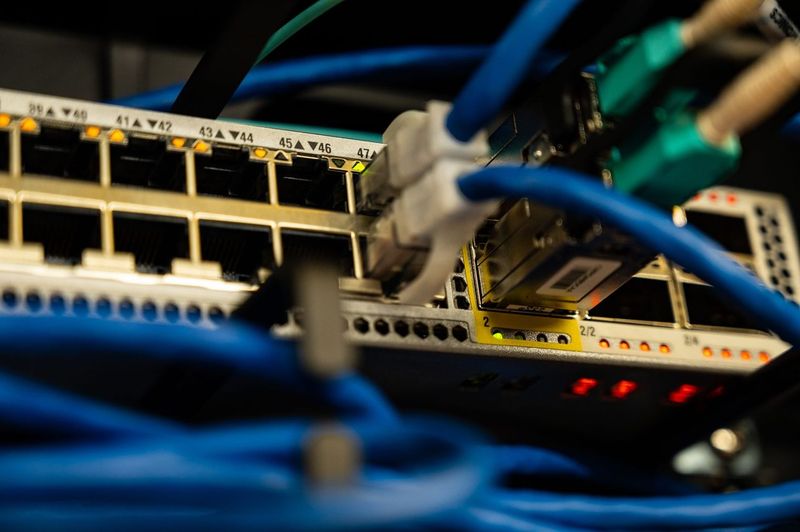
The text from Matt arrived at 11.20am on Wednesday 19 February, while I was at a table in Walkley Library halfway through a spreadsheet. It was a photo of a small hole in our front room wall with a white cable poking out of it like a worm. Underneath he'd written: "Engineer's in. Pole's fine now."
What we ordered, and when
We ordered full fibre on Friday 17 January, two days after exchange, once the address checker confirmed it was available on our street. It's 500 Mbps on a 24-month contract at £31.99 a month, with a £3.00 rise each April, the first one in April 2026. I only noticed afterwards that the rise is written as pounds and pence. That's down to an Ofcom rule for contracts signed from 17 January 2025, which stopped providers hiding rises in a formula of inflation plus a percentage.
We signed on the first day it applied, which was luck, not planning. It does mean I can tell you what we'll pay from next April: £34.99.
The house had an old copper line, which was never going to carry anything like 500 Mbps. The earliest install slot was Thursday 6 February, five days after we planned to move in, so we cancelled the flat's broadband to end on 31 January. It looked tidy on a spreadsheet. It was the first mistake.
The visit that didn't happen
I had swapped my Thursday office day for a home one to be in for the slot. The Openreach engineer arrived at 8.40am on the 6th, walked round the house and then stood in the road looking up for a long time.
The cable to our front wall has to come from the telegraph pole across the street. That pole had a tag on it saying it was flagged for a safety check, which meant another team had to inspect it before anyone was allowed to climb it. He wasn't. He was kind about it, gave me a reference number and drank half a tea before he left. Nothing was wrong with our house at all.
The second slot they could offer was Wednesday 19th. I put it in the diary and said a short, private word about telegraph poles.
Thirteen days, then a hole in the wall
That's the count from the failed visit to the working one, on my phone's hotspot. Before the 6th we'd planned to be without, so I wasn't counting. My phone plan has a monthly data allowance I'd never come close to, and by the 14th I had used 71 per cent of it and was watching the counter like a petrol gauge. On my home days I took the laptop down the hill to the library, where the wi-fi was better than anything my phone could manage. Evenings were rationed: no streaming, one weather check, two banking apps and a group chat that ran to forty messages about a birthday.
The worst moment was on the 12th, when a video call with my team dropped three times in ten minutes and I finished it as a phone call from the library's front step, in the wind, with my coat on over a cardigan. Matt, meanwhile, spent his evenings uploading lesson resources on a hotspot so slow he started calling it "the carrier pigeon".
The new engineer came at 9.30am. The tag on the pole had gone, which I took as a good sign, and he was up it in minutes. He drilled through the front room wall with a long bit from outside, fed the cable in, fixed a small white box next to the window and plugged in the router. He was done by 11.40am. Across the two visits we made the engineers four cups of tea, which is the only part of the whole business that went to plan.
When I got home, Matt held out his phone with a speed test on it. Standing next to the router, on wi-fi, it said 462 Mbps. I haven't tried upstairs yet, and I'm trying not to.
What we'd do differently
- Order on the day we exchange, not two days later. The lead time was nearly three weeks, and I'd assumed it was two.
- Keep the old broadband until the new one works, even if that means paying for both for a month. Cancelling the flat's line to avoid overlap saved about £30 and cost me a fortnight.
- Look at the pole. We obsessed over the survey, the damp and the wiring, and not once looked at the thing across the road that the whole connection depends on.
I look at that pole most mornings now, from the front bedroom window. It leans slightly, as it always did, and it is carrying the internet for what looks like six houses. I wonder, a little, who has checked it since.